What Is Brand Voice — And Why Most Brands Get It Wrong

Every brand says they have a voice. Very few of them actually do.

What most brands have is a list of adjectives. "We're approachable. Confident. Human." Great. So is every other brand that's ever filled out a positioning workshop template. Adjectives are not a voice. They're a starting point at best. A false sense of security at worst.

Real brand voice is the thing that makes a reader recognize your brand before they see your logo. Consistent enough to be predictable. Distinctive enough to be unmistakable. And a lot harder to build than most brands think.

Voice vs. tone: they're not the same thing

This is where most brands get tangled up. Voice and tone are related, but they're not interchangeable.

Voice is who you are. It stays consistent regardless of context. Tone is how you show up in a given moment. It shifts depending on what you're saying and who you're saying it to. A brand can be warm and direct while still adjusting its tone for a product launch versus a service outage. Same person, different register.

Think of it this way: your voice is your personality. Your tone is your mood. Personality doesn't change. Mood does.

The mistake brands make is treating tone as voice. Rewriting their entire communication style for every channel or campaign, with no consistent thread running through any of it. The result is a brand that sounds like a different company every time you encounter it.

The performing personality problem

There's a specific failure mode I see constantly. And it usually comes from good intentions.

A brand decides it wants to be more relatable. So it adopts a quirky, casual, overly familiar voice. Not because that voice reflects anything true about the brand. Because someone in a strategy meeting decided that's what engagement looks like. The copy starts to feel try-hard. The whole thing reads like it's working too hard to be liked.

Readers feel it immediately. You can't perform a personality you don't have. Authenticity isn't a style choice. It's the byproduct of a voice that was actually discovered, not manufactured.

The best brand voices don't feel written. They feel like someone just opened their mouth and talked.

That takes work. But it's a specific kind of work. Less about creativity, more about excavation. You're not inventing a voice. You're finding the one that was already there.

What good brand voice development actually looks like

I spent years writing product copy for Ashley HomeStore. One of the most interesting creative challenges was this: the brand sold furniture across multiple distinct lifestyle segments. Each one had its own customer, its own aesthetic and its own personality. Every segment needed its own voice. But they all had to feel like they came from the same family.

Take a look at these four lifestyle segments. Same brand. Same furniture. Four completely different conversations.
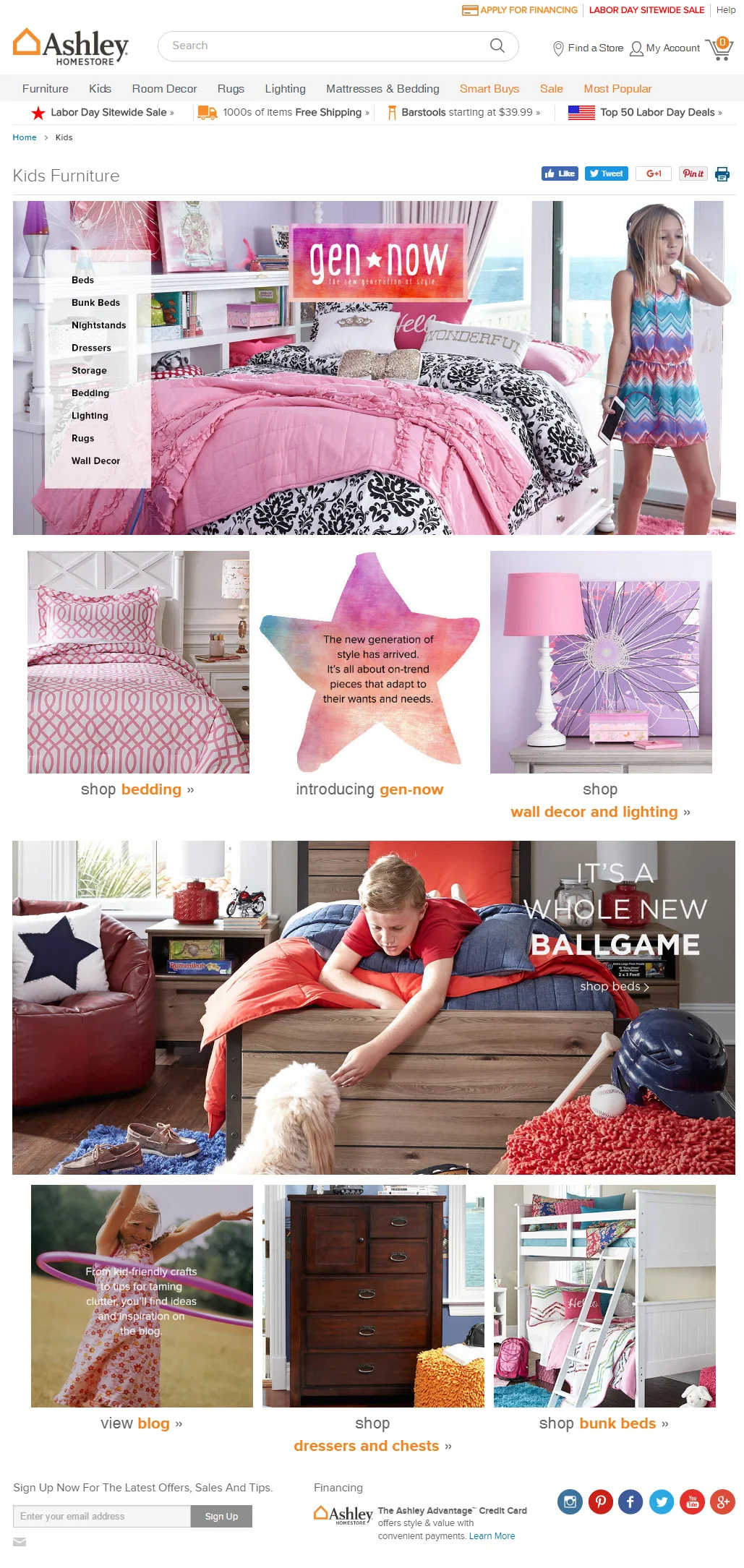
Gen Now lifestyle landing page View full page
Gen Now
"The new generation of style has arrived."
Bold and a little loud. Written for teenagers who want to feel seen, not sold to. It earns attention by speaking directly into their worldview, not down at it.
Contemporary Living lifestyle landing page View full page
Contemporary Living
"Where stylish memories are made."
Polished and aspirational but never intimidating. It flatters the reader without overselling. The person on the other end wants to feel sophisticated. The copy lets them.
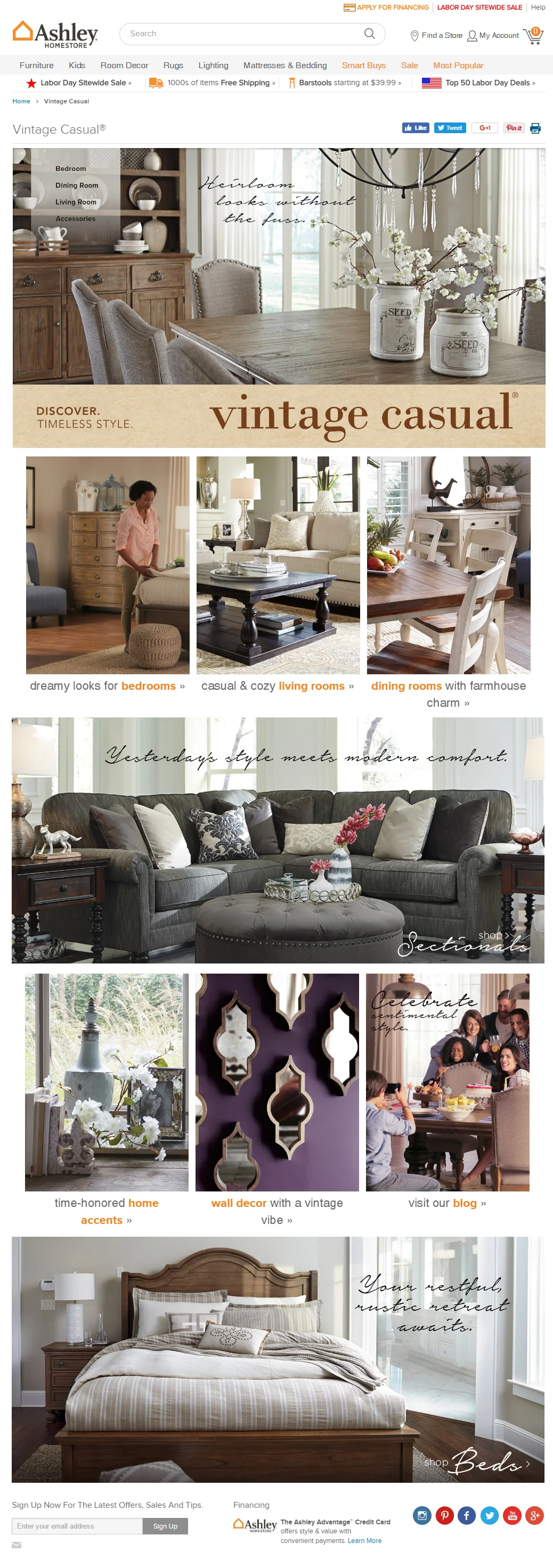
Vintage Casual lifestyle landing page View full page
Vintage Casual
"Heirloom looks without the fuss."
Warm, nostalgic and unhurried. It feels like a Sunday morning. No urgency, because this customer doesn't respond to urgency. They respond to comfort and familiarity.
Urbanology lifestyle landing page View full page
Urbanology
"City-chic looks for adventurous tastes."
Edgy, confident and a little restless. It assumes the reader already has a point of view. Because they do.

Four voices. All siblings. None of them strangers to each other — you can tell they came from the same family. But each one is having a completely different conversation, because each one is talking to a completely different person.

That's brand voice development done right. Not "pick some adjectives." Not "be more fun." Know who you're talking to. Then sound like it.

How to find your brand voice

Start by listening, not writing. The raw material for a real brand voice is almost always already there. In how your best customers describe you. In the emails your team sends when they're not being "professional." In the founder's offhand comments that make everyone laugh in meetings.

Ask the right questions. What do we sound like at our best? What do we sound like when no one's watching? What words would we never use? The "never" list is often more useful than the "always" list.

Then write. A lot. Read it out loud. If it sounds like something a human being would actually say, you're getting somewhere. If it sounds like a brand guidelines document, start over.

And this is the part most brands skip: build the guardrails. A voice that only lives in one copywriter's muscle memory disappears the moment someone new joins the team. Document it. Give it examples. Show what it sounds like when it's working and what it sounds like when it's not.

Brand voice development isn't a deliverable. It's a practice. The brands that get it right are the ones that treat it that way.

If your brand is still working off an adjective list, I can help you go deeper. Let's talk about what your brand voice could actually sound like.

Free download
Got a project? Start here.

Three questions. That's all it takes to brief a copywriter well. Download the template and find out what you actually need to say before you say it.

Download the brief

Why Financial Services Brands Are Terrible at Social Media (And How to Fix It)

Scroll through the social media feed of almost any bank or credit union and you'll notice something. It's fine. Inoffensive. Thoroughly, aggressively fine. Stock photography of people looking thoughtfully at laptops. Copy that reads like it survived six rounds of legal review.

Which, to be fair, it probably did.

But "fine" doesn't stop the scroll. It doesn't build loyalty. And in a category where most consumers feel zero emotional connection to their financial institution, it's a significant missed opportunity.

I've spent a good chunk of my career doing financial services social media copywriting. I've watched brands talk themselves into mediocrity over and over again. Here's why it happens—and what actually works.

Why financial services social media is so bad

The problems are almost always the same three things.

Compliance paralysis. Legal teams exist for good reasons. But when every piece of copy has to survive committee review, the life gets edited out of it. The brand voice that started as "approachable and human" ends up reading like a terms and conditions page. The fix isn't to ignore compliance — it's to involve them earlier, build guardrails that protect the brand without muzzling it, and write copy that's both legally sound and worth reading.

Corporate voice by default. Financial services brands default to formal, institutional language because it feels safe. But your customers aren't formal and institutional. They're trying to figure out if they can afford a vacation. Stressing about their kid's college fund. Wondering whether they're saving enough. Writing to them like they're attending a shareholder meeting is a choice. Not a good one.

No real strategy. Posting three times a week is not a social media content strategy. Sharing rate announcements and holiday graphics is not a content strategy. A real strategy starts with one question: what do we want people to think, feel, or do after they see this? If you can't answer it, you're just filling a calendar.

What good financial services social media actually looks like

A few years ago, I led the social media copywriting and content strategy for a student checking account growth campaign at MIDFLORIDA Credit Union. The goal was simple — grow teen checking accounts. The challenge was real: how do you get teenagers (and their parents) to care about a checking account?

The answer wasn't to pretend we weren't selling a product. It was to sell it like we actually understood who we were selling it to.

We didn't write about features. We wrote about the feeling of having your own money, your own card, your own financial independence — for the first time.

The strategy deliberately split by platform and audience. Instagram content used lifestyle photography and conversational copy written for teenagers. Facebook content was aimed squarely at parents. Blog content served three distinct jobs: financial advice for Gen Z, persuasion content for parents, and practical onboarding tips for new customers. Every piece had a specific person and a specific job to do.

The results:

22%
teen checking account growth in six months
$1.2M
in new deposits by end of year
8.7M
display ad impressions, CTR beat industry benchmarks
26%
YouTube pre-roll view rate (803K impressions)

None of that happened because we wrote great compliance-approved copy. It happened because we started with the audience — what they cared about, where they were, what would actually make them stop — and built the content strategy backward from there.

The fix

It's simpler than most brands want to believe.

Audit your content for the "so what." Go through your last 30 posts. Ask: why would anyone who doesn't already bank with us care about this? If you can't answer it, the post shouldn't exist.

Write for one person, not a demographic. "Adults 25–54" is not a person. "A 32-year-old trying to figure out whether she should open a Roth IRA or pay down her student loans" is a person. Write for her.

Segment your audience — really. The MIDFLORIDA campaign worked in part because we stopped writing one thing that had to appeal to everyone. Teens and their parents want different things. They respond to different messages. Meet them where they are.

Give your content a job description. Every piece should have a clear purpose — awareness, education, conversion, retention. No job? No post.

Financial services brands have more interesting things to say than they realize. The problem isn't the category. It's the assumption that "safe" and "good" are the same thing. They're not. Safe is just boring. And boring doesn't grow checking accounts.

If your brand is ready to stop being fine and start being worth reading, let's talk. I've spent 20+ years making complex topics feel human, and I'd love to do it for you.

Free download
Got a project? Start here.

Three questions. That's all it takes to brief a copywriter well. Download the template and find out what you actually need to say before you say it.

Download the brief